
From Too Rehearsed to Rocking Your Prepared Speech
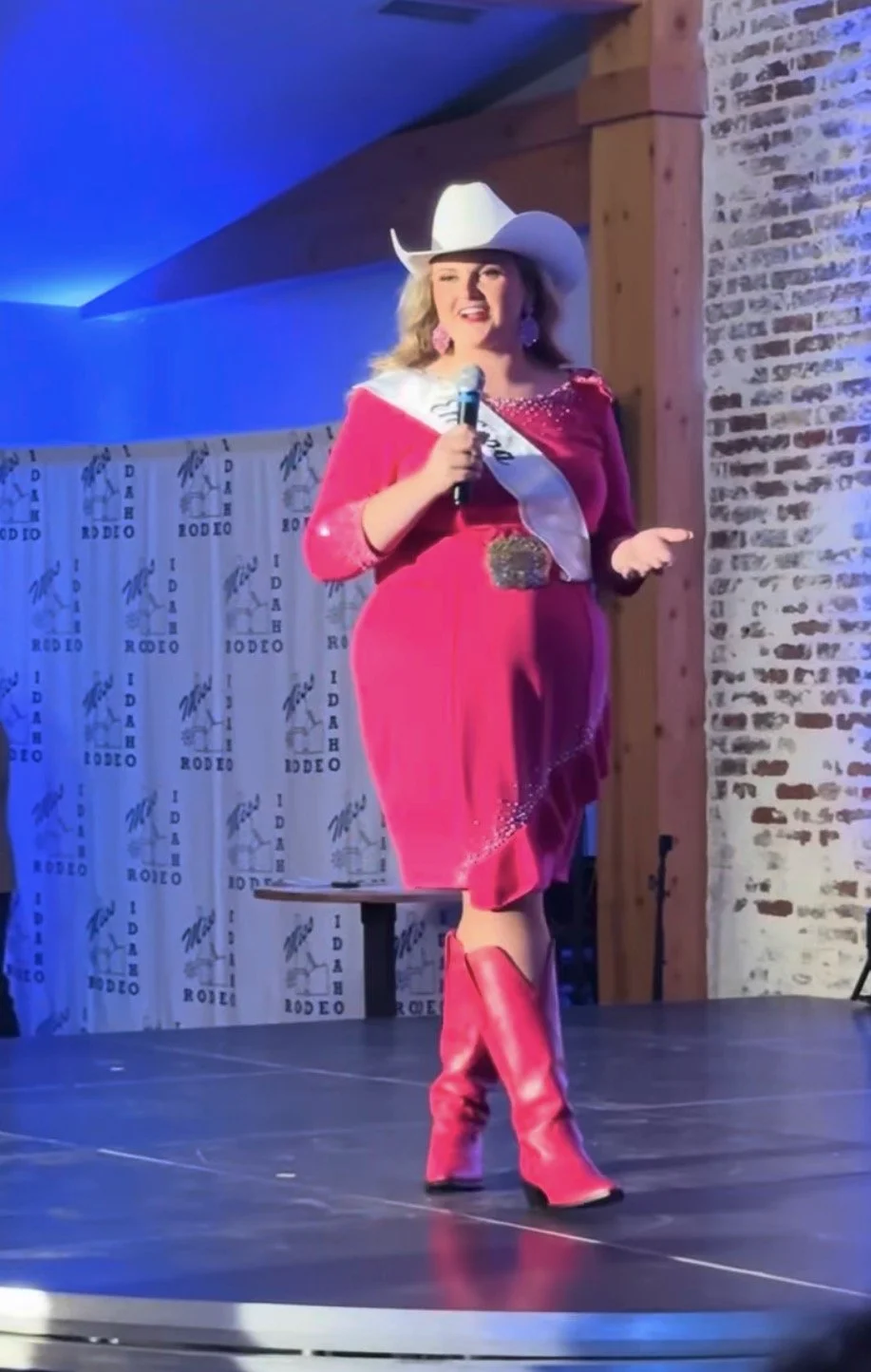
Photo of Courtney Marshall at the Miss Rodeo Idaho 2027 pageant.
Prepared speeches seem so easy. You know exactly what you’re going to say, and you have weeks—not minutes—to prepare.
So why does it still sound so… bleh? Or worse, like every other speech you’ve ever heard.
The magic recipe for winning speeches is one part content, one part delivery, and all parts memorability.
The award doesn’t go to the girl who practices the most or who’s the most memorized. It goes to the young lady the judges can’t stop thinking about. The one whose speech they still remember after they’ve written their scores down.
This reality can be really frustrating for a rodeo queen competitor. Fortunately, there’s usually a fix, and it’s not always “I need a new speech!” If you aren’t winning speech consistently, it usually comes down to one issue, and I’m going to help you with it.
The 3 Stages of Memorization
Most competitors don't realize that sounding natural is actually a process.
Memorization has three stages, and most rodeo queens stop at the middle stage and get stuck because 1) they know the words and think they’re done practicing, or 2) they don’t have someone who recognizes that they’re stuck there and can help them get out of it. That’s usually where we can help, but first, the stages…
Stage 1: Learning the Words
This is where you get the content into your head. You're reading from your paper, saying it in the car, repeating it on the way to school. You're focused on getting the words right. That's totally appropriate here.
The mistake most people make in stage one is memorizing the words without the vocal variety. (And if you’ve worked with me, this shouldn’t surprise you!) When you practice just to get through the words, especially while multitasking (*cough* like when you’re memorizing your speech while you're riding your horse cough), you're drilling the words without the delivery. That becomes your default.
Some stop here because they technically know the words. But usually delivery isn’t very interesting.
Stage 2: Over-Rehearsed
At this stage, you have it memorized, but now it sounds too polished. Too performed. Every pause is a little too precise. Every emphasis is a little too obvious. You sound like you're in a school drama production rather than having a genuine conversation with a room full of people. Some call it “dramatized reading.” In rodeo queen circles, we call it “queen voice.”
This stage can feel discouraging because you think you’re there. You have it memorized, and you sound like a rodeo queen, but your contest results aren’t rewarding it. That’s because it’s usually predictable and overly done. You’re delivering it right, but you don’t believe it. This is usually where people get stuck.
Stage 3: Natural and Authentic
This is where you want to be. Your speech is fully memorized, but it sounds like you're speaking from the heart. You have the inflections and gestures, and they look and sound natural, not rehearsed and not as if someone else told you to do them that way. At this stage, you can be interrupted mid-sentence and pick right back up where you left off. You can make eye contact with individuals in the room without freaking out. You can read the audience and respond to them.
The transition from stage two to stage three happens when you stop reciting your speech and start owning your message. When you talk about something emotional, the audience believes you. When you drop a funny one-liner, the audience laughs. When you speed up and sound excited, they’re there with you. It's no longer "so and so told me to say it this way,” but rather it's "I'm saying it this way because I genuinely believe it."
How to Memorize Your Speech Fast
The single biggest shortcut to stage three is to memorize with your vocal variety already built in.
Don't learn the words first and add the expression later. That makes the expression feel like a layer on top, and honestly, it can be why you lose the variety under pressure. Instead, practice the way you want to perform from the very first run-through.
Other moves that help:
Stand up for every practice session because your body needs to know what competition feels like—and because you should be moving!
Record yourself so you can actually hear what you sound like
Practice in front of a live audience, even if it's just your mom or a friend
Do full runs without stopping, or start from the middle and build backwards rather than starting over from the beginning every time
Practice in the outfit or boots you’ll be wearing so you know to fix the bounce in your walk or figure out how to stop playing with the fringe on your dress BEFORE you’re on stage
Try this for your next contest and see what a difference it makes in your performance!
Find more training resources and coaching options at projectpageantry.com.
