
Knowledge Is the Secret Weapon of Every Successful Rodeo Queen
Every rodeo queen competitor knows she should be studying. But knowing and doing are two different things, and studying is almost always the first item dropped when the schedule gets tight. Before you let that happen, let's talk about what's actually at stake. Because the answer might surprise you.
58% of Your Scorecard
At the Miss Rodeo America pageant, the written test is worth 300 points. Personal interview, horsemanship interview, group interview, impromptu speaking, the cowgirl kickoff luncheon also have questions, which means knowledge elements. When you add it all up across four judges, an estimated 3,020 out of 5,200 total points are directly tied to your knowledge.
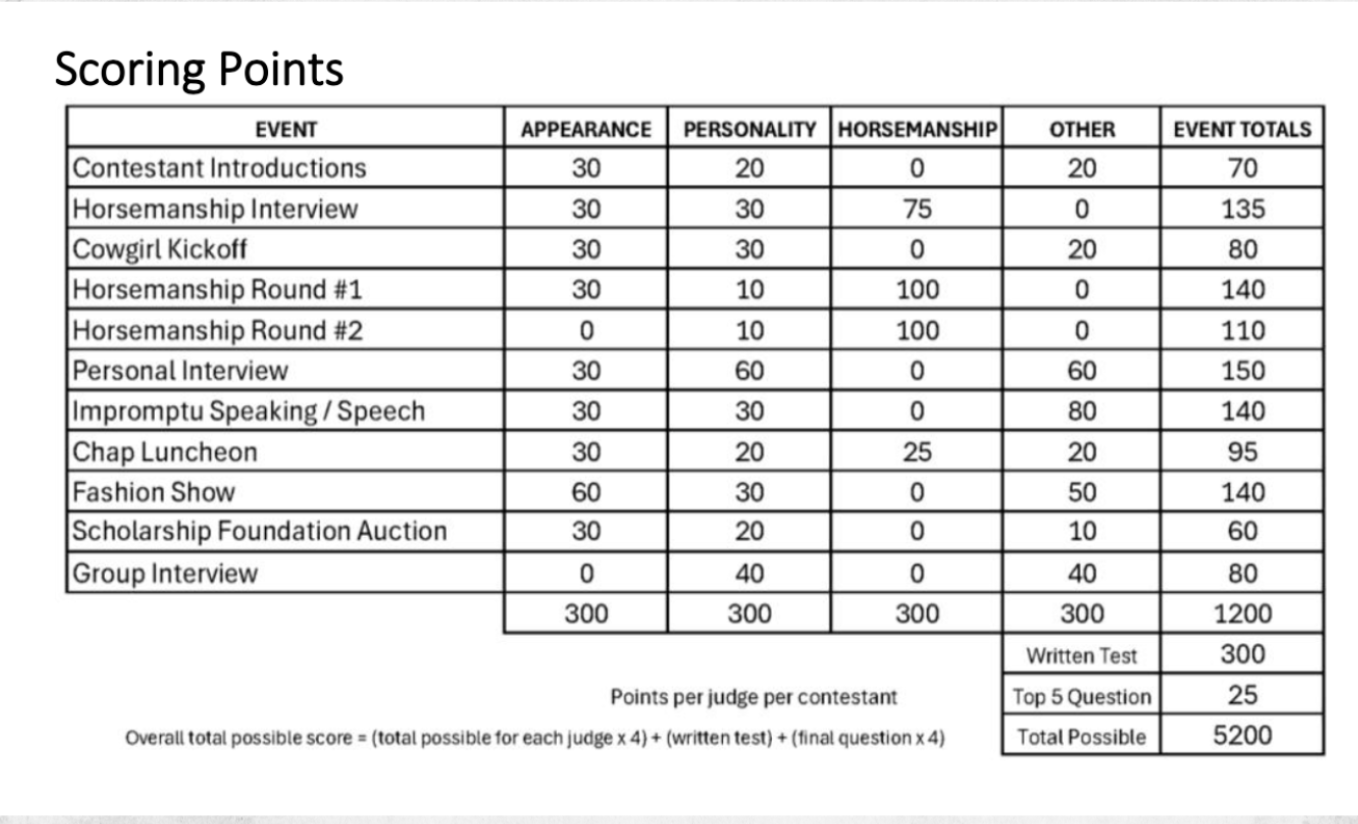
That’s roughly 58%, which means that more than half of the entire score at the largest rodeo queen pageant in the country is sitting there, ready to be yours — if you put in the work. While the breakdown might not be the same at every contest, typically there are hidden knowledge components at every contest, if you look closely.
Here's another reason why the written test is especially worth your time at a queen contest: it's the only portion of the pageant where judges cannot compare you to anyone else.
At fashion show, they're watching you next to the girl beside you, even if unknowingly. In your speech, they're comparing your delivery to everyone who went before you. On the written test? That’s not the case. What you put on that paper is yours alone. The points are completely within your control, and nobody else's performance can touch them.
It Shows Up Everywhere, Not Just the Written Test
Even if the written test weren't worth a single point on its own, studying would still matter because knowledge bleeds into every other category.
Think about your personal interview. You'll be asked about the sport, about current events in rodeo, about rule changes and notable competitors. If you've spent months studying those topics, you're not scrambling to recall something you half-read once. You're speaking from a place of genuine fluency.
Think about your horsemanship interview.
In Montana, as an example, the Horsemanship Award includes an interview component. The Top Hand Award, which is the typical Horsemanship Award, was awarded for the riding component only. So, in theory (and it’s happened!), you can win the Top Hand Riding Award and not the horsemanship category, simply because of the interview.
Think about impromptu questions. At each contest, you’re asking rodeo, current event, or personality questions that require knowledge to answer well. Preparation doesn't just get you through the written test, it gets you through the whole pageant.
The more deeply you understand rodeo, the more naturally that comes through in everything you do. You don't have to perform knowledge. You just have to have it.
What to Do When You Don't Know the Answer
Even the most prepared competitor will hit a test question she doesn't know. Here's how to handle it.
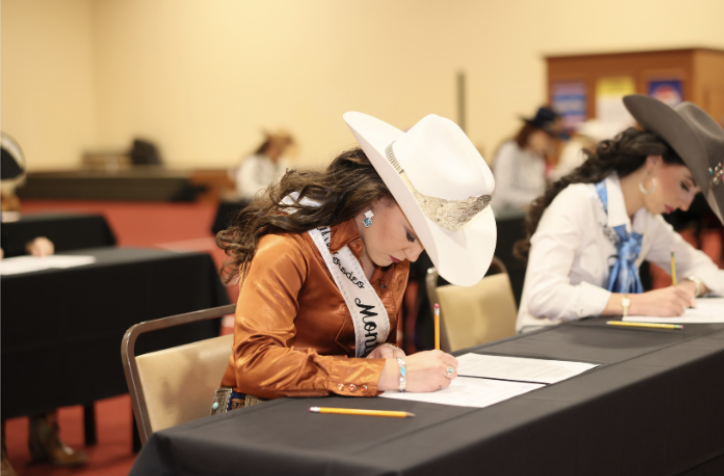
First and most important: never leave a blank. On a multiple choice question, you have a 25% chance of being right if you guess, assuming four choices. If you leave it blank, you have a 100% chance of being wrong. Always take a shot.
When you're stuck on a multiple choice question, look for clues within the answers themselves:
Watch for an outlier, or one answer that looks noticeably different from the others in length, structure, or language.
Look for repeated words or phrases that appear in both the question and one of the answers. Test writers sometimes give it away unintentionally.
Eliminate options that you know are wrong, then make your best call from what's left.
This approach, sometimes called the Franzenpanics method in education circles, isn't a perfect science, and it won't replace real studying. But when you're genuinely stuck, it gives you a fighting chance instead of a guaranteed zero.
For short answer questions, still write something. You might get partial credit. You might even get lucky! At a pageant in Montana, a competitor was asked to name a famous bucking horse and didn't know the answer, so she wrote a smiley face. The horse's name was Painted Smile, so she got credit. As Bob Ross would say, “that’s a happy accident!”
On select-all questions, use what you do know. If you're confident in two or three of the answers, mark those. Don't overthink it. And always, always look for any factual anchors in the question itself that can point you toward the right answer.
One more thing: ask for your tests back. If the pageant allows it, look at what you got wrong. That feedback is some of the best study material you'll ever have because it tells you exactly where to focus next time.
It Makes You a Better Representative
Here's the thing that gets lost in all the talk about points and scorecards. You’re auditioning for a job.
A rodeo queen is an ambassador for the sport of professional rodeo and for the western way of life. That means you need to be able to walk into a school visit, a civic event, or a conversation with a rodeo fan and actually explain what you represent. Not in a rehearsed way. In a real, confident, I-know-this way.
Can you explain tie-down roping to a five-year-old? Can you answer a question about barrel racing rules from a local parent who's curious? Can you hold your own in a conversation with a stock contractor about what makes a great bucking horse? Those conversations aren't pageant performances. They're your job.
The queens who stand out during their year, the ones committees remember, the ones who get invited back, and the ones whose titles mean something, are almost always the ones who know their sport cold. Studying isn't just about the trophy. It's about being worthy of the crown after you win it.
The Bottom Line
You can look perfect on stage, interview beautifully, and ride with confidence, and still not win a pageant because you skipped studying. That's not a theory; it's happened. And it will keep happening to girls who treat the written test and the knowledge component as an afterthought.
But here's the good news: this is entirely within your control. Every rule you learn, every current event you follow, every question you ask at a rodeo is a point in your pocket. Nobody else can earn it for you, and nobody can take it away.
Start now, no matter how far out your contest is; sprinkle it in; and keep going. The girls who win aren't always the ones who studied the hardest for the longest. They're the ones who never really stopped.
Want more expert insight like this?
This blog post was adapted from the "Study Smart, Score High" online clinic with Amber LaCross. Missed the first one on how to study based on your learning style? Read it here.
About the Author
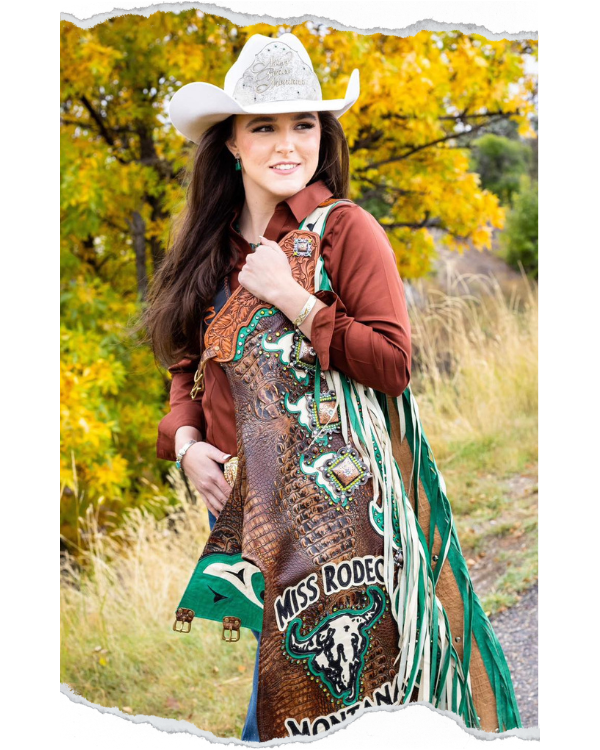
Amber LaCross is an educator with over a decade of experience working with learners of all ages, and holds a Bachelor of Science in Early Childhood Education. A lifelong student of rodeo, Amber has won the written test award at every pageant she has competed in — from local titles to the Miss Rodeo America stage, where she competed as Miss Rodeo Montana 2024.
After finishing her time as a titleholder, Amber channeled her passion for learning into Royal Knowledge, a business dedicated to helping rodeo queen competitors build their study skills, tackle written tests with confidence, and develop the knowledge base that makes a truly well-rounded queen. She is available for mock interviews and study consultations and can be reached through her Royal Knowledge business profile.
