
How to “Write” An Extemporaneous Speech
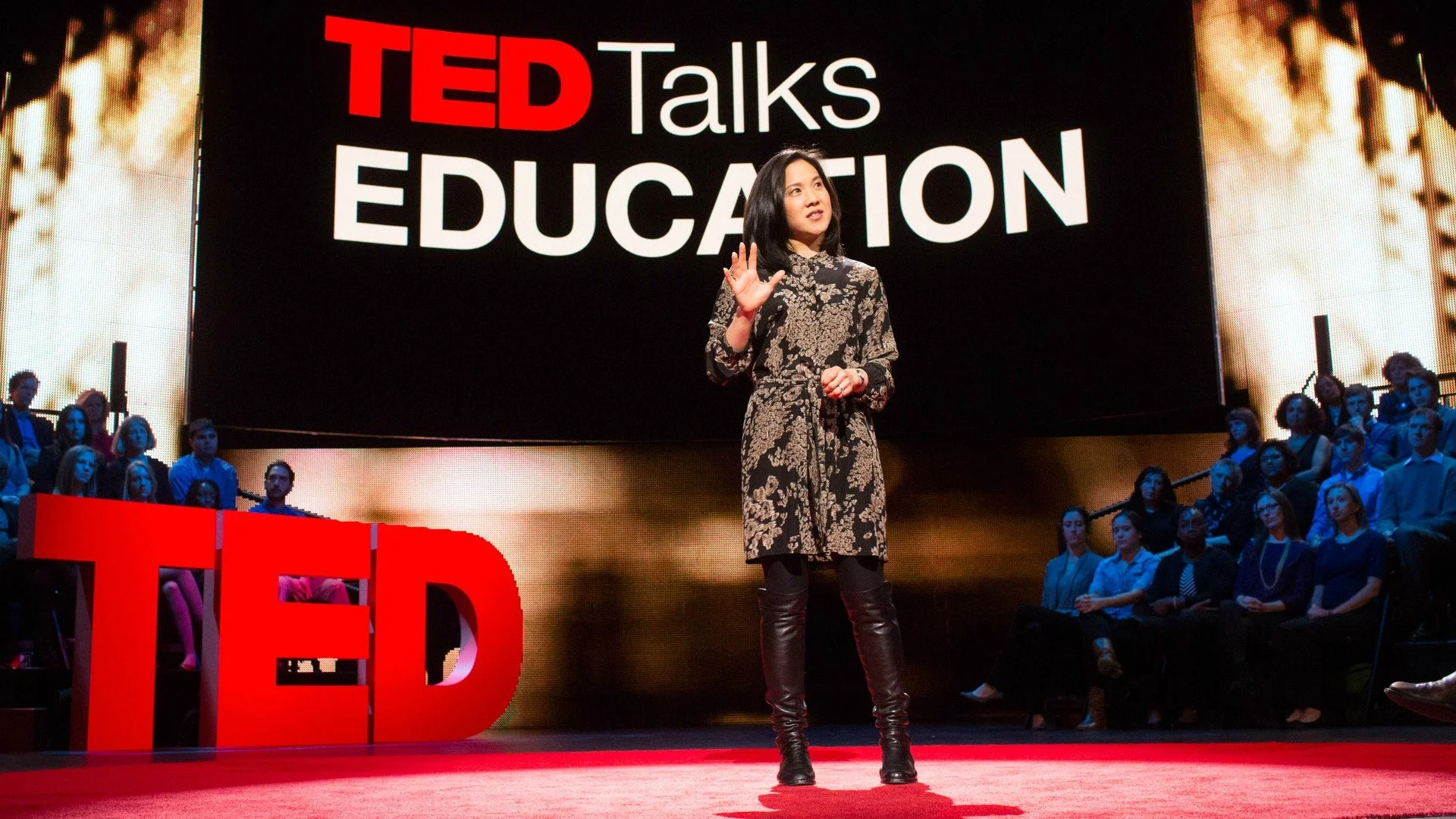
Angela Duckworth, author of Grit, speaking
If you're competing for a 90-second extemporaneous speech and you walk in with a 30-second story already prepared, a third of your speech is done before you see the prompt. That should take a lot of the panic out of it. It also means you have a lot of control over the quality of your speech because if you can write good stories, you start out with a better speech out of the gate.
Prepared content isn't cheating. A TED speaker doesn't walk on stage hoping it goes well for an hour, and an emcee doesn't walk up to a microphone with nothing. Professionals prepare so the first time they say something isn't the first time they've said it. You're doing the same thing. Here's how to build stories you can pull from for any prompt.
What Makes a Good Story: Real, Personal, Relatable
I look for three things in every story a girl brings me.
Real. It's something you actually lived. Sometimes girls write a story about someone else in the second or third person. Try “I,” “me,” and “my” instead. If your story is about your favorite rodeo athlete, it's easy to list what he or she has done at the NFR. It's far more powerful to tell us what you saw and appreciate about them, like the time she stopped to give you a pointer at a rodeo, or how she's always looking out for the next generation of barrel racers.
Personal. Your stories are one of the best ways for an audience to learn your values and personality. It works like an interview answer. If you say you'd be a Snickers because you're a little nutty but sweet on the outside, you've shown the judges something about you. Your stories do the same thing at a larger scale. Whether what matters to you is your horses or your integrity, it should come through.
Relatable. You're speaking to an audience, so it's not about you. You want someone listening to think, “I've felt that.” Maybe they've never fallen off a horse in front of a crowd, but they know what embarrassment feels like. Maybe they haven't recovered from the same injury, but they've had to come back from something hard. The audience doesn't need your exact experience. They need to recognize the emotion.
Build a Variety, Not Just a Favorite

Most girls have a go-to story they use every time. Keep it. Just don't rely on it alone, because not every prompt fits the same story. A Disney quote calls for something very different from “how about them cowgirls” or “long live cowboys.” Variety in your stories gives you options.
Use these prompts to get your stories flowing:
Who is your role model, and why do you look up to them? This could be your mom, a teacher, a sibling, a rodeo athlete, or a public figure. The “why” shows your values.
Who is your favorite rodeo athlete, and what do you appreciate about them?
What's a challenge you've overcome? An injury, a move, a hard season with your horse.
What's an embarrassing moment, and what did you learn from it?
And don't limit yourself to the rodeo arena. You have a life outside of horses. Maybe it's volleyball, a job, a musical instrument, class you struggled with, or other unique talent. Stories from outside rodeo can also fit a wider range of prompts, and they show judges there's more to you than a saddle.
Write a Moment, Not a Sequence
The most common story mistake I see is a play-by-play: this happened, then this happened, then this happened. Pick a single moment instead and describe it. Stuck? Use your five senses: what you saw, heard, smelled, touched, and even tasted. “I could hear the buzzer go off as I made it to the bell of my very first steer ride” puts a listener in the arena in a way “then I got bucked off” never will.
Prepared speeches have always used colorful language to describe the horse, the setting, the sagebrush after rain. The same thing works here. You already have the time to do it, because the description lives in your prepared story, not in the part you're making up on the spot.
Keep It Around 30 Seconds
A good length for most stories is about 30 seconds, or roughly five sentences. The exact number depends on how fast you talk and how much vocal variety you add, which tends to stretch things out. I'll let girls go to 45 seconds if the story is strong, and 20 seconds is fine too. The point is to know your length, so when you get a prompt, you know how much room you have to build around it.
One story is usually enough for a whole speech once you add the bridge and your message. Girls who are new to extemporaneous and are coming off two- or three-minute memorized speeches often want to pack in several stories because that’s what you do when it’s longer. However, 90 seconds goes by faster than you think, and one well-told story with a clear message beats three rushed ones.
Learn Them Well
I recommend memorizing your stories close to word for word. That may sound like it contradicts extemporaneous speaking, but it actually frees you up. When you're busy remembering what comes next, it's hard to think about how you want to say it. When the words are solid, you can put your attention on emotion and vocal variety: slowing down for a heavy moment, picking up energy for a funny one.
Memorizing your stories also means you can think about everything else: your bridge, your message, where you're standing, and whether you look like you're having fun—all details that take your speech from good to great.
Try It Now
Grab a piece of paper or your phone and answer this: What's an embarrassing moment in your life, and what did you learn from it? Write a three-to-five sentence story. Describe one moment, use at least two senses, and don't worry about making it perfect. You can polish it later.
Here's mine. I was nine at my first rodeo queen contest, with a hairnet attached to a barrette and a speech on note cards. After watching the other girls, I knew we had messed up. My whole body was hot as I stared down at my cards, unmoving. I hoped that if I stayed still enough I might disappear into the wall.
It's not flattering, but it's real, personal, and something plenty of people can relate to. It has also fit at least half the prompts on my practice list.
Once you have a handful of stories like these, you're ready for the next piece: connecting them to any prompt in real time.
If you missed the first session on the framework for extemporaneous speech, read Extemporaneous Speech for Rodeo Queens.
